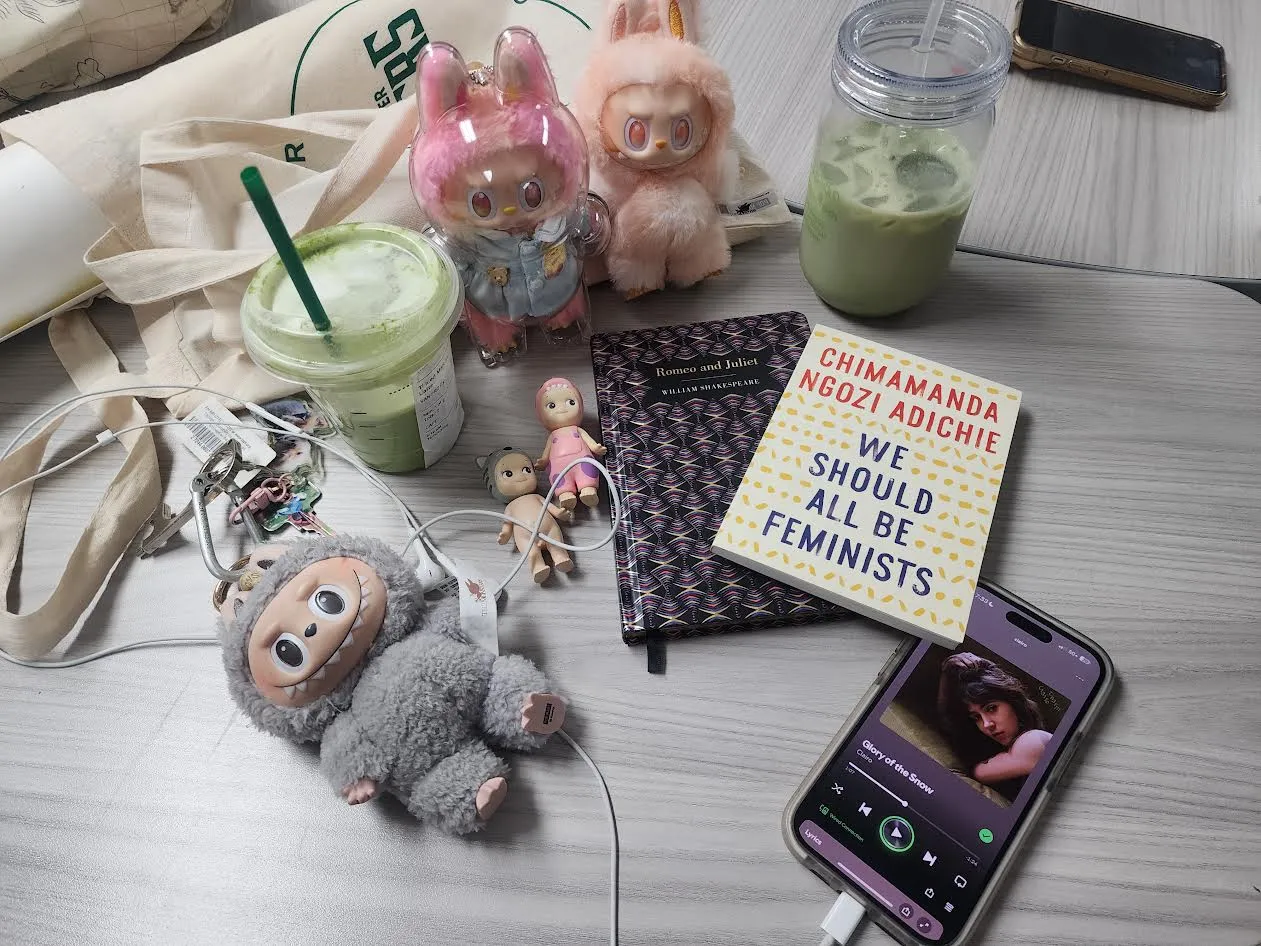
A $9 matcha is easy to blame.
The cost is frivolous, the drink seemingly trivial. “One matcha, please” is heard in cafes across the entire country. Yet, this innocent-looking, smooth, earthy green drink has become a symbol of Gen Z's supposedly superfluous spending.
At around $8 or $9, a single matcha can cost nearly an hour of work for someone earning minimum wage in some states, which makes the expense feel more significant. Its popularity often leads to a broader critique concerning Gen Z: that cutting back on small luxuries could make larger purchases more attainable.
That criticism is often built upon a lesson in personal responsibility. During a June 2025 appearance on The Diary of a CEO podcast, investor Kevin O’Leary criticized young people for spending on everyday conveniences rather than saving or investing.
“I can’t stand it when I see kids that are making $70,000 a year spending $28 for lunch,” O’Leary said. “That’s just stupid.”
“I can’t stand it when I see kids that are making $70,000 a year spending $28 for lunch,” O’Leary said. “That’s just stupid.”
His criticism treats small, recurring purchases as choices that can delay long-term financial security, reinforcing the idea that younger people could improve their financial position by changing their individual spending habits.
But Lolita Harvell’s experience complicates that idea. Although she is not a member of Gen Z, her story recounts an experience that exposes the underlying accessibility gap between a matcha and a mortgage for people of all ages.
After serving three years on active duty in the military and another year in the reserves, Harvell earned a bachelor's degree in business management from the University of Illinois Springfield, with a minor in accounting. Following this pathway, she imagined herself becoming a successful businesswoman.
In 2024, she was approved for a home loan supplied by the Department of Veterans Affairs and started looking for houses. She looked at approximately 30 homes. As a first-time buyer, she felt overwhelmed.
“I don't feel like I had the proper guidance,” Harvell said. Then, she was laid off.
Her finances changed quickly overnight. Her credit score fell, and rent became harder to manage as home prices spiked. Over the next two to three years, she described constantly moving money between expenses just to keep up.
“Just as soon as I'm thinking I'm getting caught up on my rent, my light bill is two months late,” Harvell said. “So I'm paying this one here, and then not paying this one here. Then next month, doubling up on this one here.”
Harvell’s experience leads to a familiar criticism of younger people: that Gen Z is struggling financially because they spend “too much” on coffee, eating out, or other small luxuries. Her story also raises the possibility that financial instability may have less to do with age or supposedly irresponsible spending than criticism suggests.
Affording a home requires more than cutting discretionary spending. Buyers must save enough for a down payment and earn enough to cover mortgage installments, property taxes, and other housing costs. As home prices rise faster than wages, younger Americans like Harvell face obstacles building wealth while affording essentials like rent and transportation. For those living paycheck to paycheck, cutting occasional purchases may provide some breathing room, but it cannot address rising housing costs or the risk of an unexpected loss of income.
According to a January 2026 report from Redfin regarding homeownership among Gen Z, only 27.1% of Gen Z adults owned their homes in 2025. Among 28-year-olds, 38.3% of Gen Z owned homes, compared with 42.5% of Gen X and 44.4% of baby boomers at the same age.
The report attributed much of the generational difference to housing affordability, with buyers needing an annual income of about $112,000 to afford a median-priced home, roughly $25,000 above the median U.S. income.
Inflation has made everyday expenses harder to manage, while rising housing costs and student loan payments can leave less money available to save. In 2024, 60% of U.S. adults said price changes over the previous year worsened their financial situation, according to the Federal Reserve’s annual survey of household finances.
For some younger Americans, financial independence itself has become an increasingly distant dream. A 2024 Pew Research Center stud y found that 57% of adults ages 18 to 24 lived with their parents in 2023, compared with 53% in 1993. Another Pew analysis published in 2025 found that 18%of Americans ages 25 to 34 lived in a parent's home in 2023.
Evren Savci, an associate professor of Women's, Gender and Sexuality Studies at Yale University, tied this focus on personal responsibility to neoliberal capitalism, which she said “replaces freedom with individual choice, so much so that people forget that freedom is a much more expansive concept.”
Neoliberal capitalism, an economic system that prioritizes free markets and stresses self-reliance, defines financial security as managing risk privately and making informed choices.
Before neoliberal capitalism became dominant in the 1970s and 1980s, the government had a greater role in supporting financial security and regulating markets. Under it, however, more responsibility shifted to individuals. Retirement and health insurance became more dependent on private systems such as 401(k)s, private insurance, and personal borrowing. Financial security began to be framed more as the result of personal choices rather than larger economic conditions.
For younger people with fewer accessible paths toward traditional markers of independence, consumption can offer someone a pathway to identity while allowing them to exercise control over a smaller part of their lives.
“People are no longer eating and drinking something because they are hungry and thirsty, but they believe that the very thing they consume says something about the truth of themselves,” Savci said.
Sacvi also questioned why purchasing products has become a more accessible source of enjoyment than spending time with friends or engaging in other activities that do not require consumption. In the past , social interaction could more easily revolve around simply being together at home or in a public space, without needing to spend much money.
Today, even casual socializing comes with a cost, whether through transportation, food, coffee chats, entertainment, or simply having somewhere to meet. This change makes consumption feel increasingly necessary to social life.
Sandy Htwe, one of the founders of Sukoon, a Gen Z-run pop-up café in Los Angeles, told The Politic, “younger customers generally spend more money on drinks, even when trying to cut back on expenses because the price of the drink is affordable enough for them to not feel guilty about threatening their larger financial goals.”
“younger customers generally spend more money on drinks, even when trying to cut back on expenses because the price of the drink is affordable enough for them to not feel guilty about threatening their larger financial goals.”
Htwe's observation suggests the value of the purchase isn't limited to the drink itself. “It becomes more than just buying a drink; it’s a small experience they can enjoy and share with others,” Htwe said.
Yet those same experiences are often read online as signs of an irresponsible Gen Z. Matcha trips and skincare products look like evidence of a generation spending carelessly while long-term financial security becomes increasingly out of reach. But these purchases also reflect a shift in everyday life, where small forms of consumption have become some of the most attainable and accessible ways to experience social connection and enjoyment.
Dr. Hayley Cocker, a senior lecturer at Lancaster University Management School who researches influencer culture and consumer behavior, said influencers often make products desirable by placing them inside carefully curated versions of their everyday lives. “Audiences aren’t really buying single products in isolation,” Cocker said. “They’re buying small pieces of the overall world an influencer has built.”
Cocker describes this as an “influencer-driven consumption constellation,” in which a single purchase leads to a greater sense of identity or lifestyle. When matcha repeatedly appears in carefully curated routines online, it can become associated with an aspirational lifestyle.
“The little treat products recommended by influencers remain a relatively low-risk way for consumers to buy into a lifestyle they admire, even when the bigger version of that lifestyle, a home or a car, is financially out of reach for many,” said Cocker.
A $9 matcha offers an aesthetic experience associated with a particular kind of life promoted online—spending time at a trendy café, having a routine worth sharing, or feeling connected to a community with similar tastes.
Unlike larger financial commitments such as rent, car payments, or a mortgage, these purchases are easier to make without planning far in advance. A drink, skincare product, or piece of clothing can offer a brief sense of participation in a lifestyle that might otherwise feel unattainable. Because each purchase is relatively manageable on its own, consumers can access that feeling without taking on the larger and more sustained costs tied to long-term financial security.
Sarah Marmol, a Los Angeles-based TikTok creator who posts fashion content under the name “Shuuuieee,” has also worked with sponsored products in her own videos.
“Influencers, at times, are not directly pushing a product into your face,” Marmol said, describing how creators incorporate sponsored products into relatable videos.
By placing products into their daily routines, influencers encourage viewers to associate a certain type of consumption with a wealthy lifestyle. That appeal may be especially strong when creators seem relatable, and their lifestyles feel within reach. However, products can begin to feel less like optional purchases and more like requirements for achieving that same identity or lifestyle.
When viewers repeatedly see the same clothes, drinks, skincare products, or routines presented as part of an ideal life, spending can become tied to the pressure to keep up, even when those purchases do not fit comfortably within their finances.
Marmol pointed to her own past sponsorships with Flower Knows, when she incorporated gifted products into a relatable video rather than directly telling viewers to buy them. The link between consumer products and aspirational lifestyles long predates social media, with advertisers using celebrities and carefully curated images to tie products to particular identities.
Social media applies that same strategy by deliberately placing products in influencers’ everyday lives, making them feel more personal and accessible. Marmol said she has seen younger viewers search for the exact clothing influencers wear, while influencers often make that search easier by sharing product names, links, or where to buy the items directly in their captions.
Marmol argued that criticism of individual spending habits often overlooks the financial circumstances behind those purchases.
“I think it really does stem from the bigger picture,” Marmol said, referring to the difficulty younger people face building financial stability when access to stable employment and the cost of living can limit how much they are able to save.
Sacvi offered another perspective, suggesting that access to consumer products can sometimes create a misleading impression of financial security.
"Credit and the resulting access to certain commodities create the illusion that the gap between standards of living has narrowed," Sacvi said.
Harvell's experience showcases how quickly that sense of security can change.
Once approved for a home loan, she could imagine a future beyond renting. But after losing her job, keeping up with immediate expenses took priority over purchasing a home.
As financial pressure mounted, Harvell detailed how she began cutting back on expenses and trying to manage payments with increasingly limited funds.
"I'm managing, but I'm just above the water," she said.
"I'm managing, but I'm just above the water," she said.
Eventually, she said, she realized that maintaining her apartment was no longer financially sustainable.
Harvell’s financial instability did not begin with an expensive drink—it followed layoffs, rising housing costs, and the loss of the financial position that had once allowed her to consider buying a home.
From that perspective, the distinction between saving $9 on a matcha and affording a home becomes difficult to ignore. The small purchase remains visible and easy to criticize. The job loss, rent payment, or damaged credit score that determines whether someone can qualify for a mortgage is less visible.
As Harvel puts it, in regards to her financial matters, “I’m just juggling, juggling, juggling.”